A row of six blue mailboxes on a street in Charleston, South Carolina. Focus is on the first mailbox's rusty screw head.

When I was a research attorney for Alameda County Superior Court, my judge drilled into me to always check the proof of service to make sure that it was signed and service on all parties had properly been made. As a Discovery Referee, I still review the proof of service first and I am always amused when the proof of service is signed saying that I was already served. Recently I was reading Aaron Morris’ article “Don’t be that Attorney—Ten Ways to Make Yourself Look Foolish”,  a humorous article that many of us lawyers always wanted to write about the outlandish positions attorneys take. I specifically enjoyed his third pet peeve and had to pass it along.

So here it isContinue Reading To Sign or Not to Sign Your Proof of Service

gears concept

Recently I received a telephone call from an attorney wanting to discuss whether opposing party’s objections to her special interrogatories had any merit.  Listening to the list of objections, it was clear that the opposing party had failed to assert the objections in good faith as the objections included a General Objection preamble and every response included the same boilerplate garbage objections.  However, one of the objections I hadn’t seen before:  “No preface or instruction shall be included with a set of interrogatories.  C.C.P. §2030.060(d).”  The propounding party had placed the definitions of specific terms in a preamble.  Did I think this was ok or not?

Continue Reading Avoiding the Technical Mistakes When Drafting Written Discovery

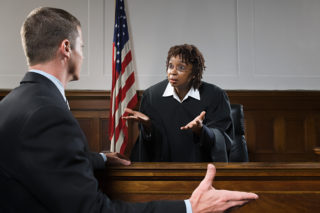
Exasperated JudgeThere are very few discovery cases that come out each year.  Usually they are are significant and involve privileges such as Coito v. Superior Court and Catalina Island Yacht Club v. Superior Court.  The newly reported case  Mitchell v. Superior Court (2015) 243 CA4th 269 is not one of those cases.  However, it does demonstrate a trial court’s error in excluding witnesses at trial, because it did not understand the definition of “INCIDENT” in the Judicial Council Form Interrogatories and what the standard is in issuing evidence sanctions regarding discovery abuse .

Continue Reading The Interrogatory Says What it Says

businessman sitting at his desk and falling asleep

For years I have been blogging about bad discovery habits from Garbage Objections to unauthorized General Objections, and preached that attorneys must play by the rules. As you know if you have read my blogs, I am quite the supporter of the 1986 Discovery Act, and often express my opinions  on a party’s responsibility during the discovery process.  More importantly, I attempt to educate lawyers about the Discovery Act so they can be well prepared with their arguments when the court makes a wrong turn (yes, it does happen).

Continue Reading The Pitfalls of Bad Discovery Habits

A close-up of a Baseball or Softball Home Plate Umpire

Recently I received an e-mail from an attorney who followed my advice regarding General Objections.  It went like this:

“I read your article ‘Why you Need to Bring a Motion to Strike General Objections,’ and filed a ‘Motion to Strike Defendants’ Preliminary Statement and Unmeritorious Objections.’  The Preliminary Statement contained many of the issues you pointed out in your article, and each of defendants’ responses to interrogatories and document requests contained the same 28 lines of objections.  The court then separated the motions to compel from the motions to strike and refused to rule on the motion to strike stating “There is no such motion.” Is the court correct?”

Continue Reading DISCOVERY GAMES AND MISCONCEPTIONS – Is the Court Correct That There is No Motion to Strike in Discovery?

iStock_000012781059_Small

Unlike Federal Rule Civil Procedure 26(e)(1) – (2), California law does not impose a continuing duty on a party to supplement their interrogatory or document responses.  Biles v. Exxon Mobil Corp. (2004) 124 CA 4th 1315.  Instead, the California Discovery Act has two statutes, C.C.P. §2030.070 and C.C.P. § 2031.050, that allow the propounding party to ask for updated information “bearing on answers already made” and “later acquired or discovered documents, tangible things, land or other property.”

Continue Reading Are You Following Up on Your Opponent’s Discovery Responses?


Personal Injury attorney Miles B. Cooper, a partner at Emison Hullverson LLP, wrote a very insightful article in the March, 2014 issue of  Plaintiff Magazine on the joys and pitfalls of deposing treating physicians.

************************************************

Something came up for opposing counsel at the last minute and he didn’t show. That left us – the court reporter, videographer, and me – sitting in the conference room with the treating doctor deponent, the one who had been too busy, according to his office (disinterested, I suspected) to meet me face to face. “Doctor, while you’re here,” I began . . .


Continue Reading Treating Physicians–Treat Them Right


I have always been a strong advocate that you should be awarded sanctions if you had to bring a motion to get the relief you were entitled to even if the other side complied prior to the hearing on the motion.  However in the case of Evilsizor v. Sweeney (2014) 230 CA4th 1304, the First District Court of Appeal had an interesting take on the issue.


Continue Reading Should you withdraw your motion if the other side has complied?

Recently I was contacted to help on a party’s Motion to Compel Further Responses to Form Interrogatories, Requests for Production of Documents, and Requests for Admissions. In viewing opposing counsel’s responses to the discovery, I gazed upon the General Response and Objections preamble in absolute astonishment.  It read as follows:


Continue Reading Why You Need to Bring a Motion to Strike General Objections

ANSWER:     A fictional document. A non-existent objection neither based in statutory authority nor found in case law. A statement by a party during the discovery phase that they will neither be held to the Code of Civil Procedure nor the rules of evidence.

In my years as a discovery referee, I have found that lawyers have gotten into the bad habit of inserting a preamble in their responses to interrogatories, requests for production and requests for admissions. These preambles often state the obvious as to what their rights are as responding parties. However, many times these preambles state general objections to the entirety of the propounded discovery and insert rights that are contrary to the obligations of the Discovery Act, the evidence code and current case law. Even though several interrogatories, requests for documents and request for admissions may be objectionable on the same ground they may not be objected to as a group. See Hogan and Weber, California Civil Discovery (2d. ed 2009) §51
Continue Reading What is a General Objection?